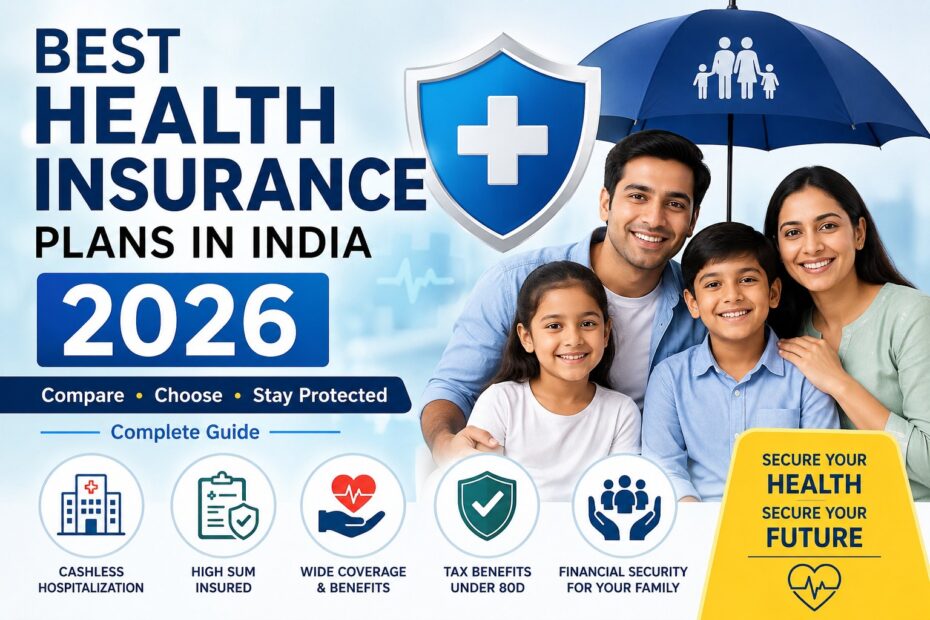
Best Health Insurance Plans in India 2026: Health insurance has become an essential financial safety net for every Indian family. With rising medical costs, hospitalization expenses, and lifestyle-related illnesses, choosing the best health insurance plan in India 2026 can protect your savings and provide peace of mind.
Whether you are a salaried employee, self-employed professional, senior citizen, student, or homemaker, selecting the right policy ensures quality healthcare without worrying about huge medical bills.
In this guide, we’ll compare the top health insurance plans in India for 2026, explain important features, and help you choose the best policy based on your needs.
Why Health Insurance is Important in 2026
Medical inflation in India continues to rise every year. Even a short hospital stay can cost lakhs of rupees.
A health insurance policy helps you:
- Cover hospitalization expenses
- Get cashless treatment at network hospitals
- Protect your family’s savings
- Receive tax benefits under Section 80D
- Access quality healthcare without financial stress
Also Read About: best-health-insurance-plans-in-india-2026-for-senior-citizens.
Features to Look for in the Best Health Insurance Plan
Before purchasing any policy, consider these important features.
1. Sum Insured
Choose adequate coverage based on your family’s needs.
Recommended Coverage:
- Individual: ₹10–15 lakh
- Family Floater: ₹15–25 lakh
- Metro Cities: ₹25 lakh or more
2. Cashless Hospital Network
Select insurers with a large network of hospitals to enjoy cashless treatment across India.
3. Waiting Period
Compare waiting periods for:
- Pre-existing diseases
- Specific illnesses
- Maternity benefits
A shorter waiting period is generally better.
4. Claim Settlement Ratio
Choose insurers with a consistently high claim settlement ratio, as it reflects their ability to process genuine claims efficiently.
5. No Claim Bonus (NCB)
Many insurers increase your sum insured every claim-free year without increasing your premium.
Also Read About: top-5-government-health-insurance-companies-in-india.
Best Health Insurance Plans in India 2026
1. HDFC ERGO Optima Secure
Best For: Families
Highlights
- Up to 4X coverage benefits
- Lifetime renewability
- Cashless hospitalization
- Day-care procedures covered
Pros
- High claim settlement
- Wide hospital network
- Comprehensive coverage
2. Niva Bupa ReAssure 2.0
Best For: Unlimited Restore Benefit
Features
- Unlimited restoration of sum insured
- Annual health check-up
- Cashless treatment
- Family floater options
Ideal for families seeking long-term protection.
Also Read: pradhanmantri-jeevan-jyoti-bima-yojana.
3. ICICI Lombard Elevate Health Insurance
Best For: Comprehensive Protection
Benefits
- Modern treatments covered
- Day-care procedures
- Cashless hospitalization
- Wellness rewards
4. Care Supreme Health Insurance
Best For: Affordable Premium
Features
- Automatic recharge benefit
- No Claim Bonus
- Alternative treatments covered
- Multiple sum insured options
Suitable for young professionals and first-time buyers.
5. Star Health Comprehensive Insurance
Best For: Senior Citizens
Benefits
- Pre and post hospitalization
- Home healthcare
- Health check-ups
- Lifetime renewability
A popular option for senior citizens and families.
Comparison Table
| Insurance Plan | Best For | Cashless Hospitals | Family Cover |
| HDFC ERGO Optima Secure | Families | Yes | Yes |
| Niva Bupa ReAssure | Unlimited Restore | Yes | Yes |
| ICICI Lombard Elevate | Comprehensive Cover | Yes | Yes |
| Care Supreme | Affordable Plans | Yes | Yes |
| Star Health Comprehensive | Senior Citizens | Yes | Yes |
How to Choose the Right Health Insurance Plan
Ask yourself these questions before buying.
- What is my budget?
- How many family members need coverage?
- Do I have existing medical conditions?
- What sum insured do I need?
- Does the insurer have hospitals in my city?
- Are daycare procedures covered?
- What is the waiting period?
Benefits of Buying Health Insurance Early
Buying early offers several advantages.
- Lower premiums
- Fewer medical restrictions
- Shorter waiting period completion
- Better coverage
- Higher No Claim Bonus over time
Common Mistakes to Avoid
Avoid these mistakes while selecting a policy.
- Choosing only the cheapest premium
- Ignoring waiting periods
- Not checking exclusions
- Selecting low coverage
- Not comparing multiple insurers
- Hiding medical history during application
Tax Benefits
Health insurance premiums qualify for tax deductions under Section 80D of the Income Tax Act, subject to applicable limits. This can help reduce your taxable income while ensuring financial protection for your family.
Frequently Asked Questions (FAQs):
Which is the best health insurance plan in India for 2026?
The best plan depends on your needs. Plans from HDFC ERGO, Niva Bupa, ICICI Lombard, Care Health, and Star Health are among the popular choices because of their comprehensive coverage and cashless hospital networks.
How much health insurance coverage should I buy?
Most financial experts recommend at least ₹10–15 lakh for individuals and ₹15–25 lakh for families, depending on location and healthcare costs.
Is cashless treatment available everywhere?
Cashless treatment is available only at the insurer’s network hospitals.
Can I buy health insurance online?
Yes. Most insurers offer online policy purchase, renewal, and claim tracking.
Does health insurance cover pre-existing diseases?
Yes, but coverage usually begins after the applicable waiting period mentioned in the policy.
Is health insurance premium going to increase in India in 2026?
Health insurance premiums may increase in 2026 due to rising healthcare costs, medical inflation, age, and claim history. However, the increase varies depending on the insurer and the policy.
How much are health insurance premiums in 2026?
In 2026, individual health insurance premiums generally start from around ₹5,000 to ₹12,000 per year, while family floater plans typically range from ₹10,000 to ₹30,000 or more, depending on age, coverage amount, location, and health condition.
What is the 5-year rule for health insurance?
The 5-year rule generally refers to the period after which insurers cannot reject a health insurance claim due to non-disclosure or misrepresentation, except in cases of proven fraud, as per applicable insurance regulations.
What is the 80/20 rule for health insurance?
The 80/20 rule, also known as 20% co-payment, means the insurance company pays 80% of the eligible medical expenses, while the policyholder pays the remaining 20% out of pocket. This feature is commonly found in certain health insurance plans, especially for senior citizens or specific policy types.
Final Thoughts
Choosing the best health insurance plan in India 2026 is one of the smartest financial decisions you can make. Instead of focusing only on the premium, compare coverage, claim settlement history, waiting periods, hospital network, and additional benefits. A well-chosen health insurance policy protects your finances, gives you access to quality healthcare, and provides peace of mind during medical emergencies. Review your family’s healthcare needs carefully and compare multiple plans before making a final decision
You are heartily welcome to our blog! We are four friends who run a Common Service Center (CSC) in India. We help people take advantage of the schemes of the Central and State Governments of India. On this blog, we authentically reach people with real and true information about government schemes. Our Official email is supportteam@bharatsarkarsuvidha.com